Kipling backpacks, recognizable by their textured nylon and their little monkey keychain, endure months of school commutes before a parent decides to clean them. The brand itself advises against machine washing for most of its nylon bags. Its official guidelines recommend surface cleaning with a soft cloth, lukewarm water, and a mild detergent, excluding bleach and harsh products.
Starting from these manufacturer recommendations, rather than a generic guide, changes the method to follow.
Kipling nylon and recycled nylon: the material dictates the method
Kipling now uses recycled nylon on an increasing part of its range. This recycled nylon does not react exactly like the older classic nylon. Recycled fibers may have a slightly different texture and increased sensitivity to certain solvents.
Before scrubbing anything, turn the backpack inside out and look for the composition label. If the mention “recycled nylon” appears, avoid any product containing pure alcohol or a strong degreasing solvent. A Marseille soap diluted in lukewarm water remains the safest choice, regardless of the fabric generation.
To find out how to clean a Kipling backpack safely, you must also consider the reinforced areas (bottom of the bag, straps) that accumulate more sweat and dust. These parts can withstand a bit more scrubbing with a soft-bristled brush, while the main body of the bag only requires a cloth.
Metal logo and Kipling hardware: the trap of alkaline products
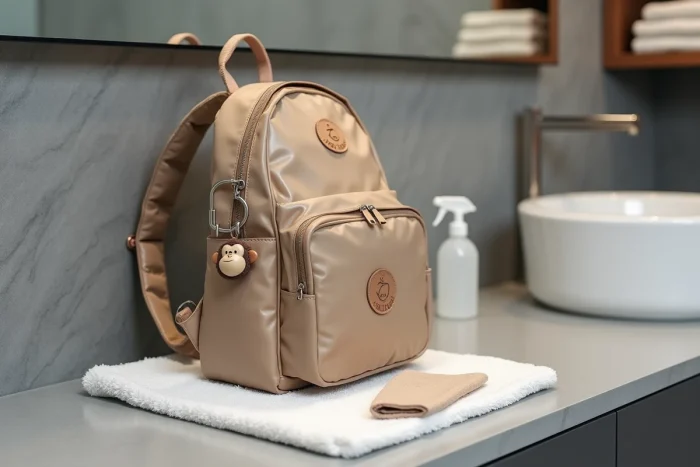
The little monkey (the plush monkey) detaches from the bag, but the rings, zippers, and the metal logo remain exposed to the cleaning product. Several Kipling bag owners report on specialized forums a discoloration of the metal logo and hardware parts after repeated use of alkaline multipurpose sprays or concentrated household soaps.
The mechanism is simple: Kipling’s metal finishes are often plated or varnished, not solid metal. A high pH product gradually attacks this coating. After a few cleanings, the logo loses its shine and the zippers become dull or greenish.
Protecting the hardware during cleaning
- Apply the lukewarm water and mild soap mixture only on the fabric, avoiding the metal parts with the cloth
- If a stain is near a zipper, use a cotton swab soaked to target the textile area without spilling onto the metal
- After cleaning, immediately dry the metal parts with a dry cloth to avoid any residual moisture marks
- Never spray a cleaning spray directly on the bag, prefer to apply it to the cloth first
This point, rarely mentioned in backpack cleaning guides, makes the difference between a Kipling bag that retains its appearance and a bag whose hardware ages prematurely.
Ink stain and felt stain on a Kipling backpack
Leaking ballpoint pens and markers in a backpack are the most common scenario. On Kipling nylon, a ballpoint ink stain is treated with a bit of 70° alcohol applied with a cotton swab, dabbing without rubbing. Rubbing spreads the pigment into the fibers instead of extracting it.
For a water-based felt stain, a damp cloth is usually sufficient if you act quickly. Permanent markers pose a more serious problem: isopropyl alcohol may help, but you should first test it on a hidden area (inside a pocket, for example) to check that the fabric does not discolor.
Step-by-step method for stubborn stains
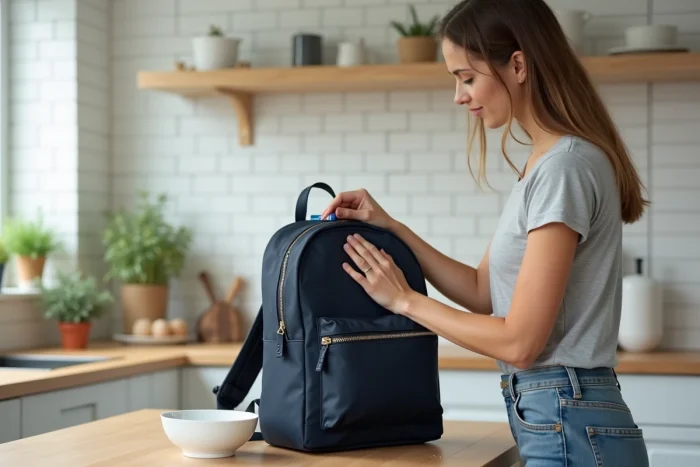
Always start by completely emptying the backpack and turning the pockets inside out. Shake it to remove crumbs and dust. Use a low-power vacuum cleaner in the corners if necessary.
Soak a clean cloth in lukewarm water mixed with a drop of mild soap. Dab the stain from the outside towards the center to avoid widening the halo. Rinse the cloth, wring it out well, then go over the area again to remove the soap. On Kipling nylon, air drying in the shade is the only recommended option: no hairdryer, no radiator, no direct sunlight that could alter the fabric color.
Washing machine and Kipling backpack: why the brand says no
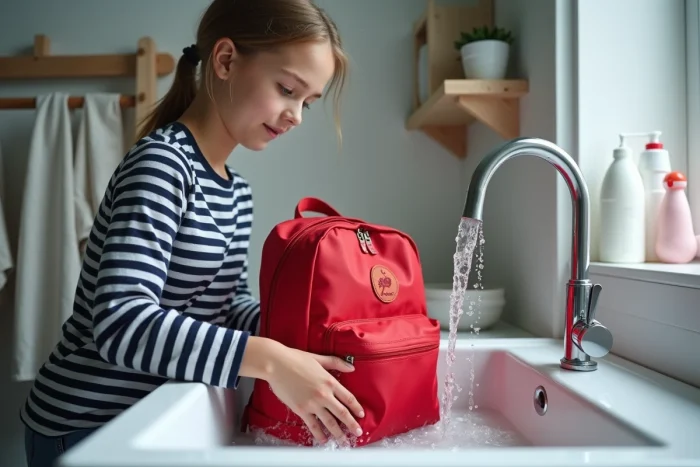
On forums and in online videos, many parents share their experiences of machine washing a Kipling bag, often with an acceptable result. Feedback on this point varies: some find the fabric intact after a delicate cold cycle, while others report pilling of the nylon or a damaged monkey keychain.
Kipling does not recommend machine washing. The likely reason is the combination of mechanical stresses (spinning, friction against the drum) and chemical stresses (concentrated detergent) that put strain on the fabric, seams, and metal parts. A cycle at 30 degrees without spinning in a laundry bag reduces these risks, but the brand does not guarantee the result and machine washing may void any warranty.
If you still choose to use the machine, remove the monkey, close all zippers, turn the bag inside out, and place it in a closed pillowcase. Select a wool or delicate program, without spinning. Keep in mind that this approach remains a personal choice, outside of official recommendations.
Regular maintenance of the Kipling backpack to space out deep cleans
A deep clean once or twice a year is sufficient if the backpack receives regular light maintenance. Each week, empty the bag and wipe the inside with a dry cloth. Air out the open backpack overnight to eliminate accumulated moisture and limit the development of unpleasant odors.
- Treat small stains immediately with a damp cloth rather than letting them set into the nylon
- Store the backpack in a dry place during vacations, preferably padded with newspaper to maintain its shape
- Avoid placing the bag directly on a wet floor, as wet dirt stains quickly penetrate the fibers
A well-maintained Kipling backpack retains its appearance for several school years. The key lies less in a miracle product than in the regularity of the action and respect for the nylon, which remains a technical fabric, not an ordinary textile.