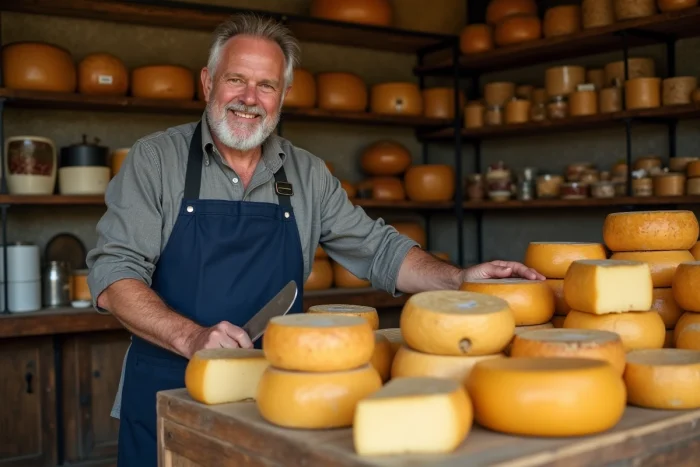
AOC since 1958 for Comté and Beaufort, 1956 for Cantal, these three cheeses are distinguished by strict specifications imposing aging methods, production areas, and specific breeds of cows. Comté requires exclusively raw milk from Montbéliarde or French Simmental cows, while Beaufort mandates Tarine or Abondance. Cantal, on the other hand, tolerates several breeds but demands a specific uncooked pressed cheese. Their production methods, aging duration, and final texture do not meet the same criteria, generating very differentiated nutritional and taste profiles.
Understanding cheese families: Comté, Beaufort, and Cantal under the microscope
Behind each name, there are precise gestures and stories passed down from generation to generation. Cheese families draw clear lines: Comté, Beaufort, and Cantal share the large family of pressed cheeses, while standing out. Comté and Beaufort embody cooked pressed cheese, requiring a temperature rise that offers a firm, less moist texture and a lingering flavor. In contrast, Cantal shows the way of uncooked pressed cheese, maintaining a rustic flexibility, a unique creaminess that subtly coats the palate, sometimes marked by a slight graininess. The rinds do not lie either: golden and thin for Comté, thick and dark for Cantal, rosy and regular for Beaufort.
Each cheese is shaped through a series of rigorous steps: curdling, vigorous pressing, aging that leaves nothing to chance. The distinction between cooked and uncooked pressed cheese changes everything, from density to the strength of aromas. But that’s not all: the origin of the milk, always raw and from local breeds, plays the role of a signature. For a precise overview, the comparative differences between Comté, Beaufort, and Cantal sheds light on these nuances, from aging duration to terroir specifics. Each wheel expresses its soil, its cellar, and the cheesemaker’s patience. Choosing between these families is to get closer to taste, character, and the desire of the moment.
What really distinguishes these three iconic cheeses?
It only takes a platter to grasp the contrasts. The Comté, pride of the Jura, offers an ivory paste, supple, flavored with dry hazelnut or fresh hay, sometimes even a subtle hint of caramel. Its aging, in a cold and humid cellar, ranges from 4 to 36 months: the most seasoned wheels reveal deep flavors of great complexity. Only one possible milk, that of the Montbéliarde cow, and an unwavering tradition that forges the inimitable style of this cheese.
Opposite it, the Beaufort cultivates its Savoyard identity. Same technique, same requirements as Comté, but the concave shape of the wheel signals it immediately. Its milk, collected from Tarine or Abondance cows at altitude, gives rise to a cheese with a melting, dense texture, yet without heaviness. The aging, between 5 and 18 months (sometimes more for the rare “chalet d’alpage”), reveals true floral and fruity bouquets, light and refined.
The Cantal, symbol of Auvergne, plays a different tune. Its uncooked paste evolves over time: sweet and milky when young, balanced and supple for the intermediate stage, firm and robust if aged long (up to 8 months or more). Its thick, brown rind breathes the countryside, fresh butter, with hints of mushroom or undergrowth. Its milk, often from the Salers cow, anchors the taste in the soil of the Massif Central.
| Cheese | Family | Aging | Milk | Specificities |
|---|---|---|---|---|
| Comté | Cooked pressed cheese | 4 to 36 months | Montbéliarde cow | Fruity aromas, supple texture |
| Beaufort | Cooked pressed cheese | 5 to 18 months | Tarine/Abondance cow | Floral flavors, concave wheel |
| Cantal | Uncooked pressed cheese | 1 to 8 months (or more) | Salers cow | Rustic, thick rind |

Flavors, textures, and uses: how to choose according to your desires
Behind the appearance or tradition, the choice of a pressed cheese is based on the search for sensations and the place it takes at the table. Each tells a different pleasure: Comté and its sweetness, Beaufort and its mountain finesse, Cantal and its power rooted in rusticity.
The Comté, known for its suppleness, melts on the tongue without ever becoming pasty. Its flavors evolve, hazelnut, hay, dried fruits, sometimes a hint of brioche, depending on the aging. It is found with the same ease at aperitifs, gratiné in a recipe, transformed into a sauce. A classic pairing: Comté and white wine from Jura, for a subtle and refined alliance.
The Beaufort inevitably evokes Savoy and generous cuisine. Its dense paste retains a unique finesse, the “chalet d’alpage” being the pinnacle: delicate floral aromas, fruity touch. It is celebrated in fondue, croziflette, and tart. A glass of crisp, mineral white wine crowns the whole.
Want a more pronounced character? The Cantal responds with its firm, almost grainy texture when aged, and its strong aromas, between butter and grass. When young, it easily complements the aperitif. With age, it enriches purées, pies, and gratins, bestowing country bread with undeniable authenticity, and finds its place at the table with a light red.
To keep track, just remember what each cheese offers:
- Comté: sweetness, wide range of uses, long aging
- Beaufort: melting, floral palette, star of Savoy dishes
- Cantal: firm texture, pronounced taste, companion of rustic recipes
Between finesse, density, or intensity, each cheese brings a piece of terroir to the table. Choosing one or the other is not just about selecting a taste: it’s opening a door to landscapes, gestures, and memories. The true luxury? Having the choice, especially when it is so delicious.