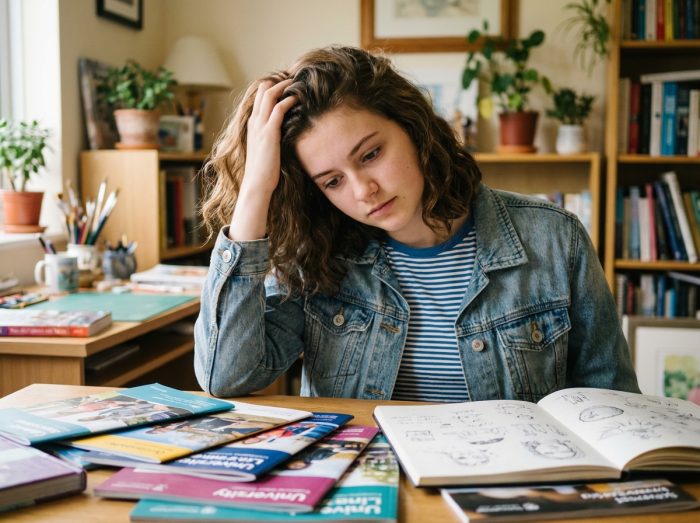
Ten years ago, changing direction mid-artistic curriculum was a real puzzle. Today, the reality has flipped: applied arts schools are multiplying pathways, shaking up their old boundaries, and challenging preconceived ideas. Admissions are becoming more selective, while the job market is rapidly transforming.
The pressure related to choosing an applied arts school after high school has never been more palpable. However, some institutions are taking the opposite approach: they enrich their programs with cross-disciplinary modules, offer internships from the first year, and promote mixed experiences to broaden horizons. This evolution encourages a rethinking of what “specializing” means when artistic professions are constantly being invented, intersected, and redefined.
Applied arts schools facing changes in the artistic sector: current trends and challenges
Applied arts education is advancing rapidly, driven by the transformation of creative professions and the proliferation of new practices. Across France, whether in Paris, Bordeaux, Toulouse, or elsewhere, applied arts schools are adapting their programs to stay in tune with the realities on the ground. Graphic design, space design, visual arts, and illustration now integrate digital innovation, cross-disciplinary approaches, and multidisciplinary teaching teams.
Institutions under the Ministry of Culture or the national education system are thoroughly revising their frameworks. We are seeing the emergence of unpartitioned curricula, the enhancement of the DSAA arts diploma, and the introduction of new modules. Collaborations with professionals, designers, architects, and players in the creative industries are multiplying, as are internships and collective projects, which are now essential.
If you are wondering how to choose an applied arts school after high school, forget about simply considering reputation or location. What matters today is pedagogy, the variety of workshops, and the school’s ability to anticipate changes in design and applied arts. Explore the pathways, assess the diversity of teachings, and keep in mind that orientation remains flexible: a first choice is no longer synonymous with irrevocable commitment.
What professions are emerging today in art and design, and how are students participating in their evolution?
The design and applied arts sector is renewing itself from one generation to the next. Schools, driven by inventive teaching teams and evolving curricula, are opening doors to long-underestimated professional horizons. Gone are the days when one was confined to illustration or spatial graphics: welcome to hybrid approaches, where digital, scenography, and cultural mediation intertwine.
Illustration training is breaking free from traditional frameworks. Students are embracing augmented reality, creating interactive installations, and designing interfaces. The role of visual arts teacher is also transforming: it now involves teaching the art of animated images, video, 3D animation, or sound creation. Curricula, with their visual arts option or arts option, are opening up to experience design, game design, responsible practices, and experimentation.
Here are some new profiles that are shaking things up in the sector:
- Creative developers blending code and visual arts
- Interface and immersive space designers
- Digital curators, scenographers for interactive exhibitions
This movement does not exist without student involvement. Their way of engaging with courses, questioning traditional teaching, launching collective projects, and weaving connections between art history and contemporary practices contributes to the emergence of new territories. Art design schools and higher art design schools are becoming true laboratories, where each graduating class shapes the contours of professions that were still unknown not long ago.
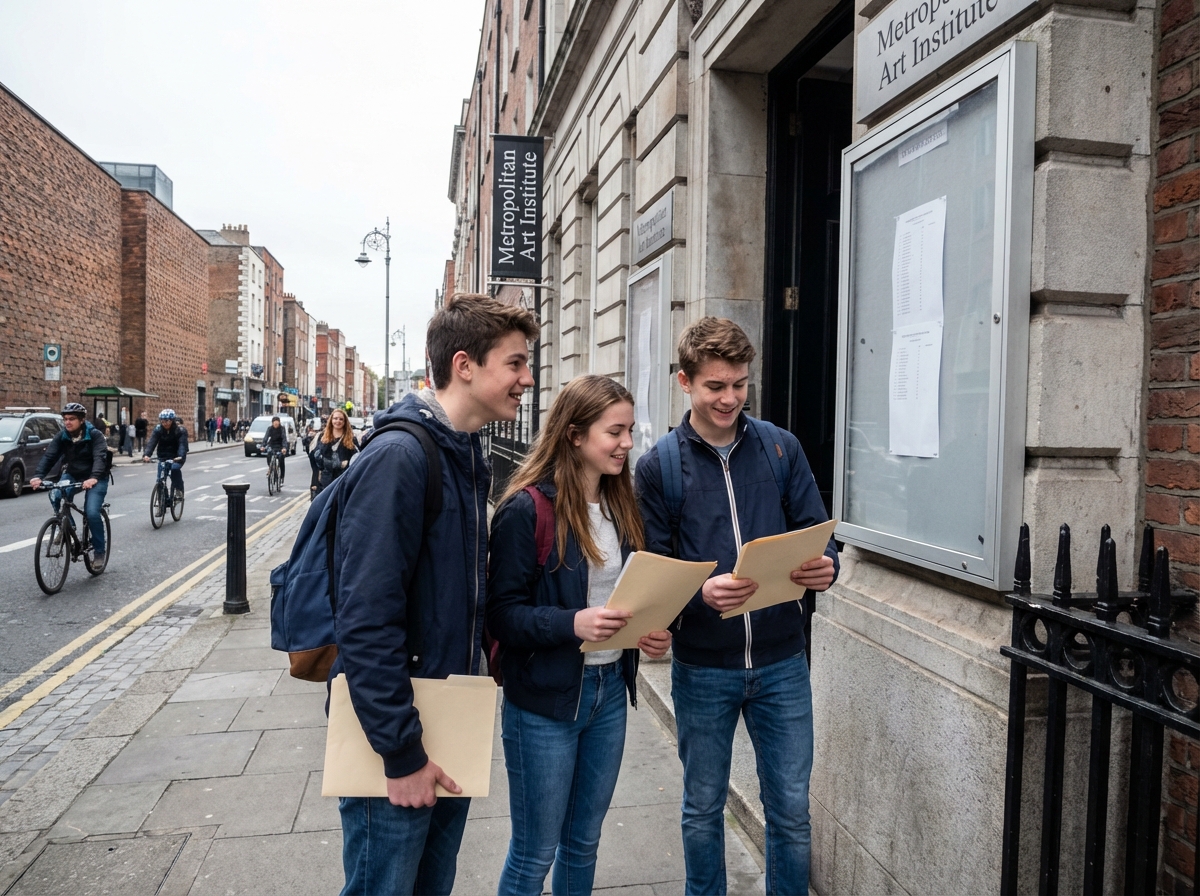
Art studies: financing, challenges, and new career opportunities after graduation
The transition after high school to an applied arts school directly raises the issue of financing. Tuition fees vary significantly in the first year, depending on whether one joins a public or private institution. For institutions under the Ministry of Culture, access remains more open, with state scholarship programs and solid social support. Between higher education aids, student jobs, and paid internships, there are several levers to lighten the financial burden. Quickly, managing one’s budget becomes as structuring a learning experience as the courses themselves.
Admission to an art school or higher arts school is determined by competitions: portfolio, interview, rigorous selection. The pace is intense, and the commitment is total: technical courses, workshops, collective projects, and reflection on one’s own creative identity. The transition from high school to higher education requires rapid adaptation to the expected level, and progress is measured as much by autonomy as by the ability to collaborate with other creatives.
Once the applied arts diploma is obtained, doors open to rapidly changing sectors: design, scenography, graphic design, teaching of visual arts, cultural mediation… Some choose to continue their education, while others prefer to dive directly into professional life, freelancing, taking short contracts, or working within innovative structures. The networks built during the course, participation in competitions or exhibitions, then become a valuable springboard for professional integration.
Nothing is set in stone: each path, each detour shapes a unique trajectory. At a time when creative professions are reinventing themselves, boldness and flexibility remain the best allies of future graduates.