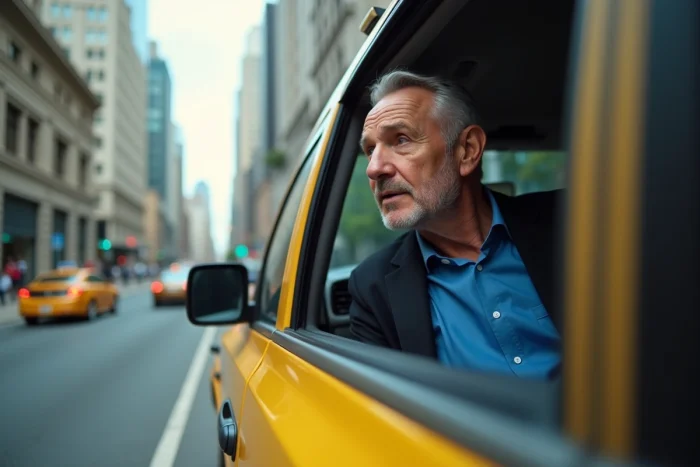
A number hits like a horn: 70% of taxi bookings are now made via a mobile app in the city. Behind this raw data, an entire sector is being reshaped, amid the demands of reform, the pressure from platforms, and environmental urgency.
Since January 2024, the reform of the numerus clausus has changed the conditions for granting taxi licenses in several major French cities. Some VTC platforms, on the other hand, are facing increased scrutiny regarding the qualifications of their drivers, following recent judicial decisions. At the same time, the draft law on sustainable mobility imposes new environmental obligations on operating vehicles.
The coexistence of these measures illustrates the ongoing adjustments between national regulation, local initiatives, and market demands. Operators must navigate a shifting regulatory landscape and growing expectations for service quality.
Current Overview: How is the taxi and VTC sector evolving in France?
The taxi transport sector is undergoing a period of intense transformation in 2024. The clash between taxis and VTC is far from anecdotal: they are competing in a space where technology has taken over. Booking apps are now the norm, capturing the majority of urban trips. One cannot overlook the Parisian context: 36% of all taxis in France operate in Île-de-France, drawn by the bustling activity of train stations and airports, which are true hubs for the profession.
On paper, the sector shows a strong recovery: revenue has surged by 9.6% compared to 2023. But behind this dynamic, obstacles are piling up. Digitalization is no longer a bonus; it has become the foundation of the profession. Managing presence on apps, optimizing routes, understanding data: everything must be learned, everything is evolving. Customers are changing too. They want clean vehicles, personalized trips, and minimal wait times.
In the face of these changes, each professional is adjusting their strategy. Independents and network members alike seek to stand out. Visibility on the web and platforms has become a decisive weapon. the news from Veritaxis reflects this ongoing movement, this necessity to sense trends and stay aligned with new rules. It is the ability to foresee the future of the sector that separates those who advance from those who stagnate.
Emerging Trends and Challenges for Transport Professionals
Two driving forces currently structure the activity: the ecological transition and the digitalization of the profession. Taxis have no choice: the pressure from low emission zones (LEZ) and the climate shift compel fleet renewal. The contrast is striking: while over 80% of vehicles in the provinces still run on diesel, half of the taxis from a major Parisian company are already operating on hybrid or electric power. Investing in a clean vehicle is no longer an option; it has become a lifeline to remain in the city and meet increasingly carbon-conscious customers.
On the digital front, skill enhancement is accelerating. Drivers are refining their use of digital tools: managing rides, analyzing their statistics, optimizing their online visibility. This technical shift disrupts practices, redefines customer relationships, and profoundly evolves the profession. Users, in turn, demand more personalization, speed, and efficiency. Professionals, whether self-employed or part of a network, are diversifying their offerings: individuals, medical trips, groups, occasional needs… each is seeking to adapt to the shifting transport landscape.
To better understand the ongoing changes, here are some telling figures:
- Type of vehicle
- % in the fleet
| Type of vehicle | % in the fleet |
|---|---|
| Diesel (province) | 80% |
| Hybrid/electric (Paris, G7 fleet) | 50% |
The cost of fuel remains high, accelerating the shift to electric and hybrid vehicles. At the same time, carpooling and collaborative transport are gaining ground, opening new perspectives for a profession that must balance adaptation and anticipation.

Regulations, Licenses, and New Measures: What is Changing for Drivers and Users
The legislative framework for taxis is tightening. Professionals must obtain a taxi license from the prefecture to operate. Securing this key remains challenging, especially in large cities where demand is soaring and the value of licenses can reach staggering heights. Inspections are increasing regarding compliance with standards, ongoing training, and precise knowledge of the serviced area.
Healthcare transport is not exempt from this wave of changes. Taxis account for nearly half of the medical trips reimbursed by Health Insurance. Discussions between unions and public authorities are intensifying around future agreements: these will reshape reimbursement conditions, prices, and how trips are reimbursed. The demand for traceability and the frequency of inspections are increasing, forcing drivers to reinvent themselves to maintain profitability and service quality.
On the client side, transparency is becoming more pronounced. Prices are clearly displayed in each vehicle. Electronic payments are becoming the norm. Administrative checks are tightening to ensure safe and compliant trips. User expectations align with regulatory imperatives: service quality and safety are taking center stage.
In this ever-evolving sector, remaining static means falling behind. Today, a taxi is no longer just a ride from point A to point B: it is the art of navigating the turn of an era, at the crossroads of technology, ecology, and civic demands.