A cracked stone at the hearth leads to a heat loss that can exceed 30%. A neglected soot deposit alters the taste of food from the third consecutive use. A buildup in the flue promotes moisture retention and accelerates the deterioration of joints. Maintaining or renovating a stone barbecue is not just a matter of aesthetics, but of performance and safety. A few precise actions are enough to sustainably extend its durability and ensure optimal cooking.
Why renovating your stone barbecue makes all the difference
The stone barbecue, the nerve center of summer gatherings, does not escape the marks of time. Whether the structure is made of raw stone, concrete, bricks, or reconstituted stone, resistance is never guaranteed: frost, poor assembly, overload, ground movements, or hasty finishes all leave their marks. It starts with fine cracks, then a hearth that weakens, and the surface that loses its luster. Quickly, cleaning requires more effort, and the magic of the barbecue fades.
Natural stone absorbs acidic stains and accumulates marks from each grilling. Without prompt action, these marks turn into weak points, threatening the overall solidity. The key actions to remember are simple: cleaning, sanding, repairing, and protecting. Each of these steps contributes to preserving the robustness of the barbecue, securing its use, and maintaining the authenticity of flavors. The most stressed areas, such as the grill, the work surface, or the hood, deserve special attention.
Keep in mind that renovating or repairing a stone barbecue is not just about filling a crack or hiding a mark. It’s about considering the quality of materials and the durability of the installation. A well-maintained barbecue heats evenly, repels moisture, and limits the risk of incidents.
To better target interventions, here are the main elements to monitor:
- Hearth: often the most exposed, it concentrates cracks and wear and sometimes requires refractory mortar or cement.
- Grills and work surface: intensive use, necessity to clean and polish regularly.
- Hood and shelves: vulnerable areas to smoke and splashes, to be checked to avoid structural damage.
What are the key steps to effectively repair your barbecue
Everything starts with a careful inspection. Look for the slightest crack, a suspicious mark, or a blackened area. An irregularity signals a weak point, often inherited from frost, excess load, or a defect from the start.
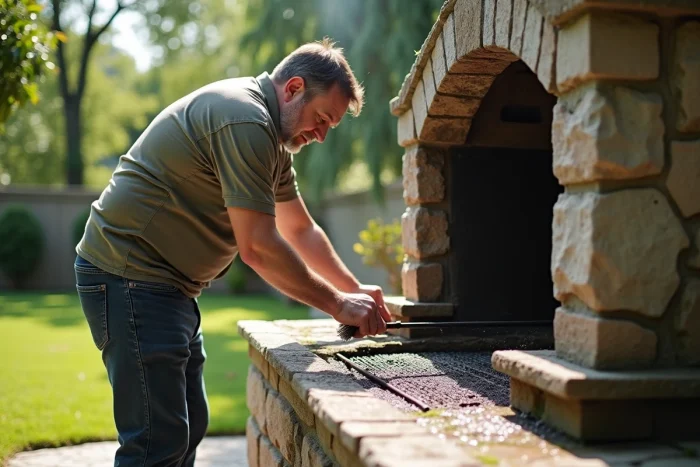
Start by eliminating all impurities. A wire brush, a blower, or an air compressor will remove dust and debris stuck in every nook and cranny. You need to achieve a clean surface before starting repairs.
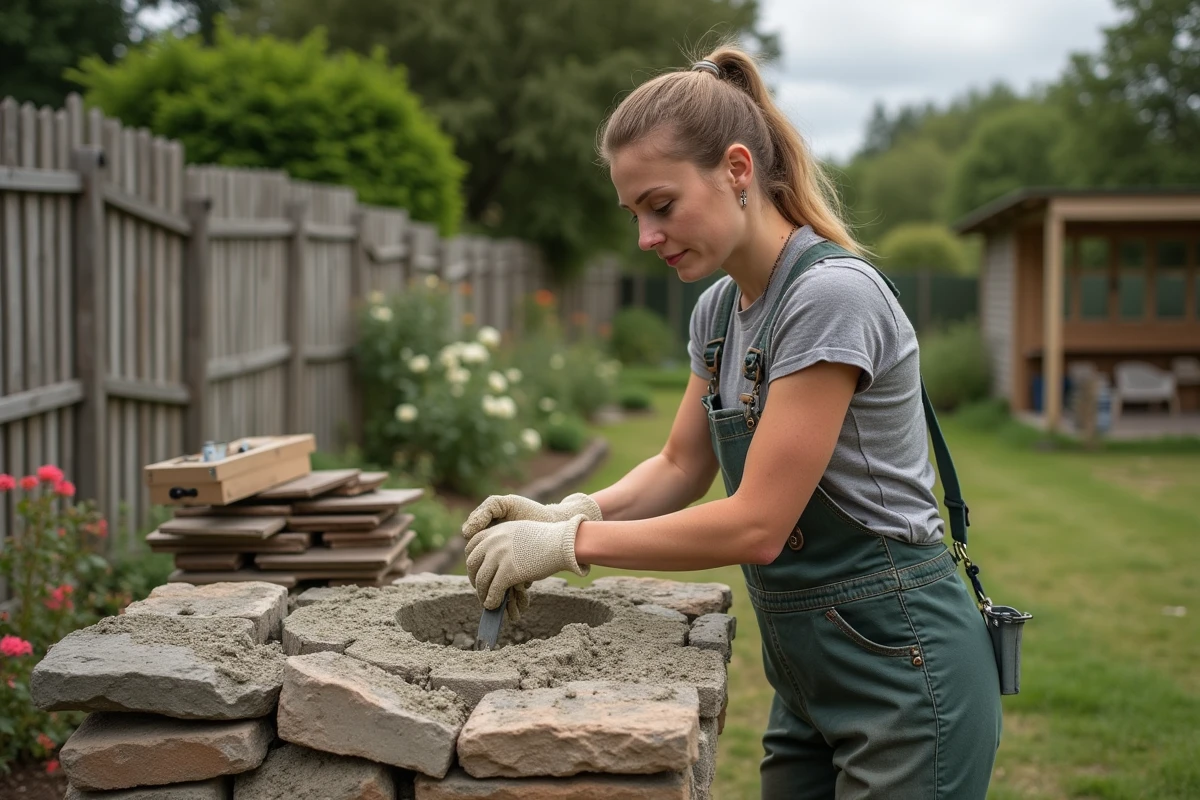
Next comes the treatment of cracks. Depending on their depth, apply refractory mortar, high-temperature silicone adhesive, or a special sealant. For areas subjected to high temperatures, choose refractory cement and, if necessary, replace damaged bricks with heat-resistant models. Careful alignment with a trowel and level avoids unpleasant surprises during heating.
After reinforcement, it’s time for sanding and polishing the stone. This step revives the surface, prepares it for protection, and smooths out roughness. Applying a water-repellent product or resin protects against moisture and extends the lifespan of your installation. If major structural damage appears, it’s better to seek the advice of a professional to ensure the reliability of the repairs.
Cleaning tips and maintenance advice to extend the lifespan of your installation
Preserving the nobility of stone and ensuring the solidity of a barbecue exposed to the elements requires a methodical approach. Cleaning should follow each use: wire brush for the grill, damp cloth for the hood and stone elements. Opt for a mild detergent or a solution of baking soda in demineralized water to be gentle on the material.
Natural stone, being porous, fears infiltrations and stubborn stains. A water-repellent treatment or protective paint repels moisture and acts as a barrier against dirt. Remember to renew this protection with each change of season, especially after winter.
Do not neglect any part of the barbecue: monitor the shelves, work surface, and joints. The slightest crack can quickly worsen. A superficial sanding followed by polishing restores shine to the surfaces. For the grill, prefer stainless steel or enameled cast iron, two materials that withstand heat and rust well.
A few simple practices can help preserve your installation:
- Choose an appropriate wire brush for effective cleaning without damaging the stone.
- Wash with lukewarm water, never under pressure to avoid weakening the structure.
- Apply a water-repellent treatment on perfectly dry stone to ensure lasting protection.
A well-maintained barbecue does not just survive the seasons: it becomes, year after year, the faithful companion of all shared outdoor meals. Who knows how many memories it will continue to forge around its repaired stones?